

Future Granular Vacuum Packaging: What Buyers Should Check First
Published on: June 29, 2026
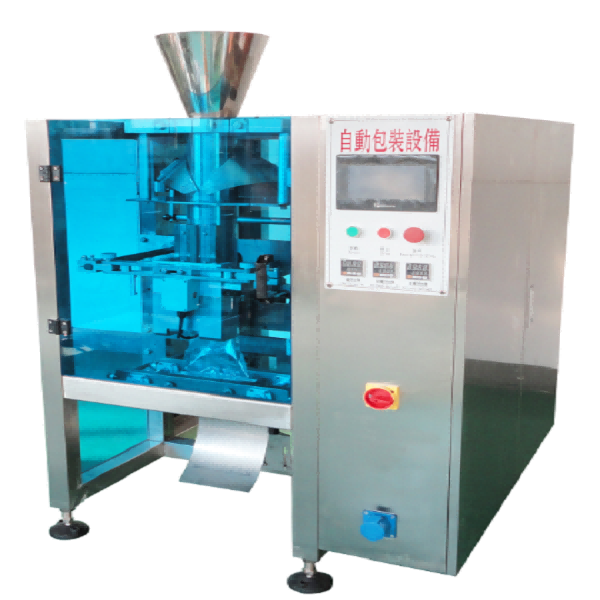
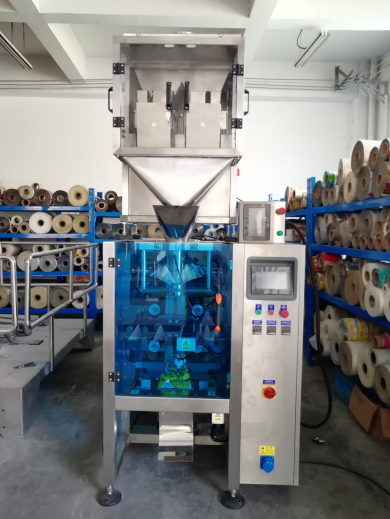
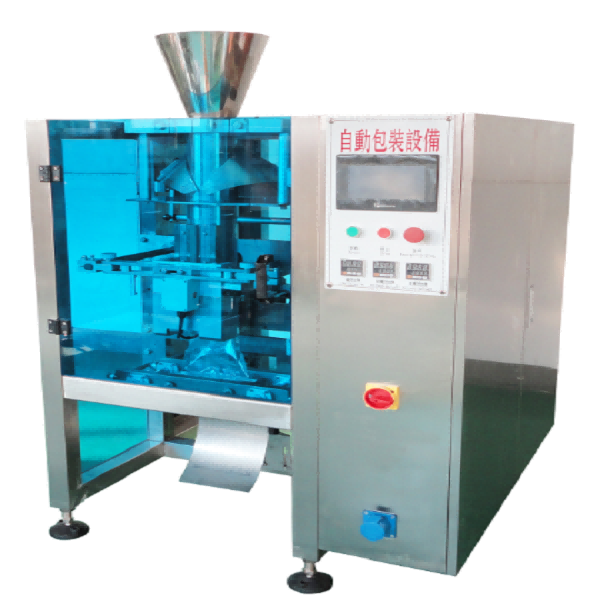
A granule pouch packing machine should protect product quality from filling to final delivery. That means buyers need to look beyond vacuum strength and ask how the machine handles barrier film, dust, one-way valves, real product flow, and shipping stress.
High-barrier films are one clear trend. Oxygen and moisture control matter for coffee, seeds, spices, and other sensitive granules. At the same time, the pouch must resist puncture and abrasion when the product has hard edges.
Another trend is cleaner and more precise automation. Sensors and stored recipes help an automatic granule packing machine keep vacuum level, sealing time, and package shape more stable across shifts. That reduces variation and helps quality teams trace problems faster.
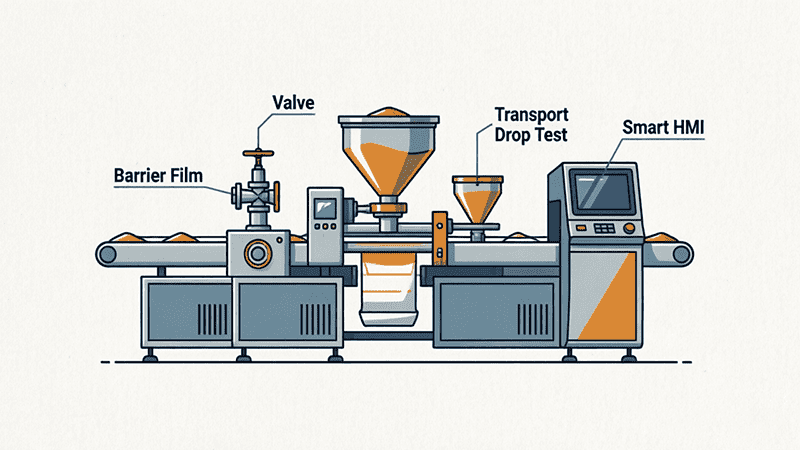
Products that release gas after packing may also need a one-way valve. In those cases, the line should be checked for valve placement, seal protection, and final package integrity after storage and handling.
Practical buying guidance is simple: run the real product, final pouch, final coding method, and final shipping carton in the trial. External references: ASTM F1927 and GS1 Digital Link.
That trial should be treated as a process check, not a sales presentation. Granular products behave differently depending on particle size, edge sharpness, dust level, density, and residual gas behavior. The same machine can produce very different results with coffee, seeds, sugar-like crystals, or industrial granules. Buyers therefore need to ask how the line performs with the real product condition rather than a simplified sample chosen because it runs easily.
Seal-zone control is another practical checkpoint. If dust or scattered particles regularly enter the sealing area, leakage may appear only after storage, transport, or pallet pressure. A bag that looks smooth when it leaves the line may not stay that way after a few days in a warehouse. For this reason, it is useful to inspect package condition after handling simulation instead of approving the machine on visual appearance alone.
Buyers should also look at how settings are managed from shift to shift. Recipe storage sounds basic, but it matters when one line handles several products with different pouch materials and different target firmness. If settings depend too much on operator memory, production quality becomes uneven and troubleshooting takes longer. A machine that stores and protects approved settings is easier to manage when output volume rises.
Another point worth checking is how the final package behaves in the route it will actually travel. Export shipments, e-commerce orders, and local retail distribution do not stress a pack in the same way. Some routes punish corners and seals. Others create longer storage exposure or repeated handling. The best package is not the one with the most aggressive vacuum. It is the one that holds barrier performance and seal integrity through the real logistics route.
In the end, future-ready granular packaging is less about adding features for their own sake and more about making the whole package system more reliable. Better film structure, better valve handling, cleaner sealing, and better process records all matter because they reduce avoidable variation. That is what buyers should check first when they want a granule pouch packing machine that performs outside the trial room as well as it does inside it.
Contact our engineering team directly:
Email: export@jialong.cn
WhatsApp: +86-136-2579-4992
Products: granule pouch packing machine