

Two Rice Vacuum Pack Problems That Buyers Notice After Delivery
A practical packaging note for rice brands balancing shelf appearance, texture protection, and secondary storage.
Most complaints about vacuum-packed rice do not start with a visible leak. They start with small disappointments: more broken grains after opening, a cooked texture that feels too soft, a package that stacks poorly, or a bag that cannot be closed again after the first meal.
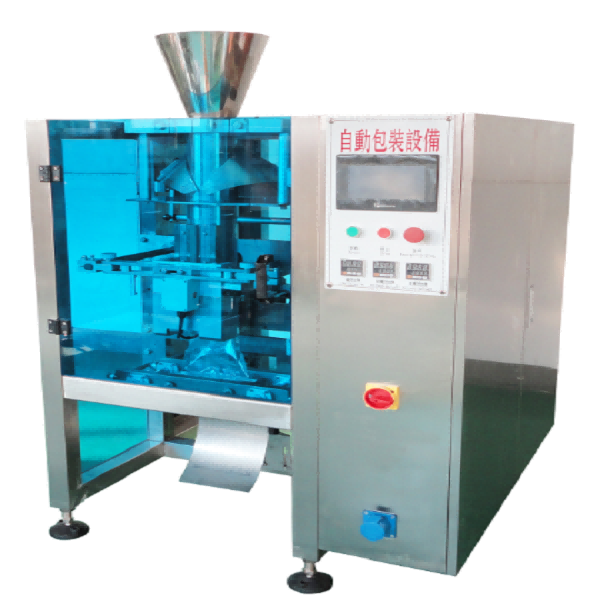
A vacuum pouch packing machine can reduce those problems when the packaging decision starts before the bag is filled. Vacuum level, film stiffness, bag shape, zipper position, nitrogen flushing, and seal pressure all change how the consumer handles the product.
Problem 1
Too much vacuum pressure can crush polished grains and create broken rice.
Problem 2
A rigid brick pack may stack well in cartons but handle poorly on retail shelves and in kitchens.
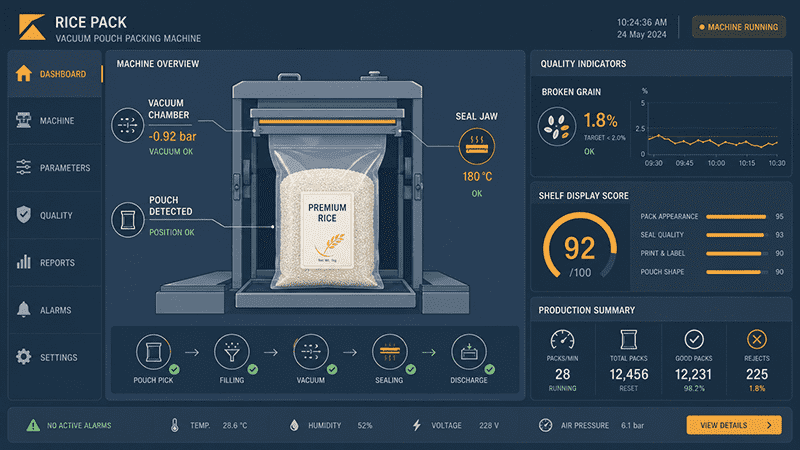
Over-Compression Makes Rice Look Worse and Cook Softer
When the evacuation cycle is too long, brittle grains press against each other under the collapsed film. Highly polished rice is more sensitive because the grain surface has less protective bran structure. The product may still look acceptable through the bag, but the broken fraction becomes obvious after pouring.
A rice bag packing machine should therefore be tested with cooking results, not only with sealing results. The buyer does not judge the pack by vacuum level. The buyer judges the rice after washing, cooking, and serving.
Set vacuum recipes by rice variety and bag weight.
Use staged evacuation instead of one hard pull when the rice is brittle.
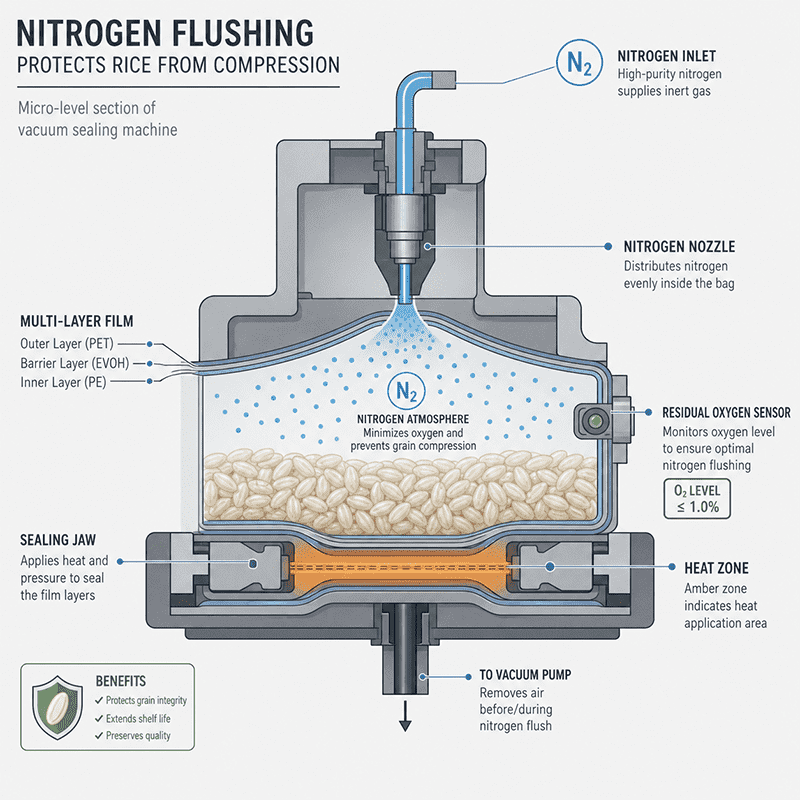
For premium retail bags, evaluate a vacuum sealing machine with nitrogen flushing to keep a controlled cushion inside the pack.
Track broken-rice percentage before packing, after packing, and after carton drop testing.
Rigid Packs Can Hurt Handling After the Sale
Brick-style vacuum packs are common because they make cartons predictable. The tradeoff appears on the shelf and in the kitchen. Sharp edges can rub against outer cartons, hard blocks are harder to grip, and opened rice needs another container unless the bag includes a reseal feature.
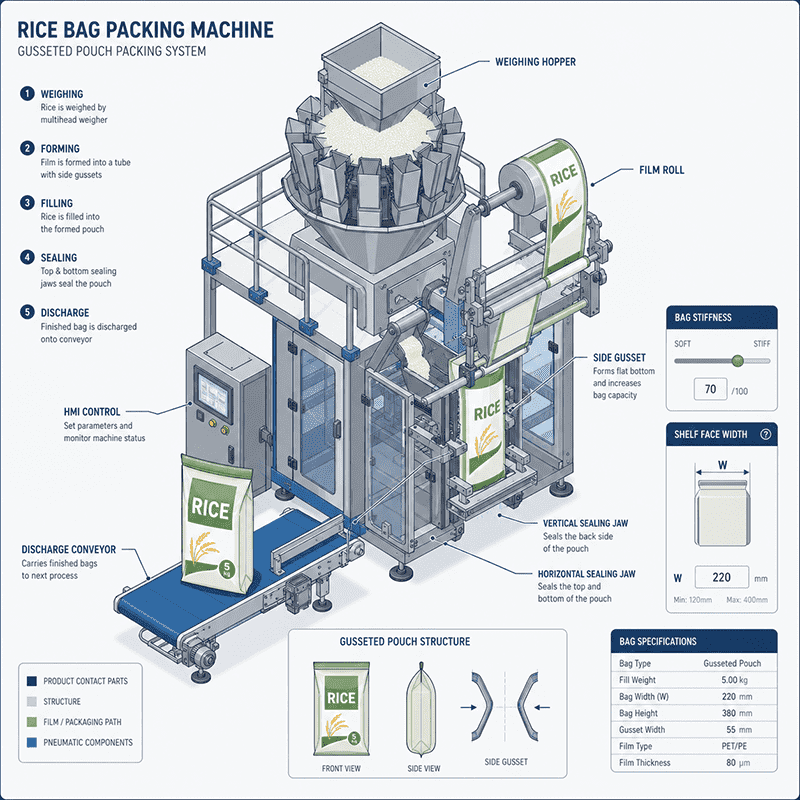
A vacuum pouch packing machine can support better handling when the bag format is chosen correctly. Gusseted bags create a more regular shelf face. Back-sealed bags can reduce edge stiffness. Zipper-ready bags need careful seal layout so the zipper does not interfere with vacuum collapse or final sealing.
| Retail issue | Packaging adjustment | Machine check |
|---|---|---|
| Hard package corners | Reduce over-evacuation or use nitrogen cushion | Vacuum pouch packing machine curve and bag stiffness |
| Poor shelf display | Gusseted pouch or flatter display panel | Forming width and side-fold control |
| No secondary storage | Add zipper or supply food-grade clip | Seal jaw clearance and zipper heat tolerance |
Film and Closure Parts Still Need Compliance Review
Zippers, clips, valves, inks, and adhesives all sit close to the food-contact decision. FDA explains that a food contact substance includes a material intended to contact food without having a technical effect in the food. For export rice, packaging buyers should review food-contact status before final artwork and bag tooling. See the FDA page on food packaging and food contact substances.
Practical Buying Guidance
Ask the supplier to test the pack with the rice you actually sell. A vacuum pouch packing machine that performs well with beans or nuts may still over-compress polished rice. A vacuum sealer for food packaging should be checked for seal strength, wrinkle rate, bag corner hardness, and cooking texture after storage.
For brands selling family-size bags, secondary storage should be part of the packaging specification. A zipper costs more than a plain seal, but a bag that stays usable after opening can reduce consumer frustration and wasted rice.
Contact our engineering team directly:
Email: export@jialong.cn
WhatsApp: +86-136-2579-4992
Products: vacuum pouch packing machine