

Vacuum-Packed Nuts: 4 Packaging Trends Buyers Should Test Before Scaling
Published on: June 5, 2026
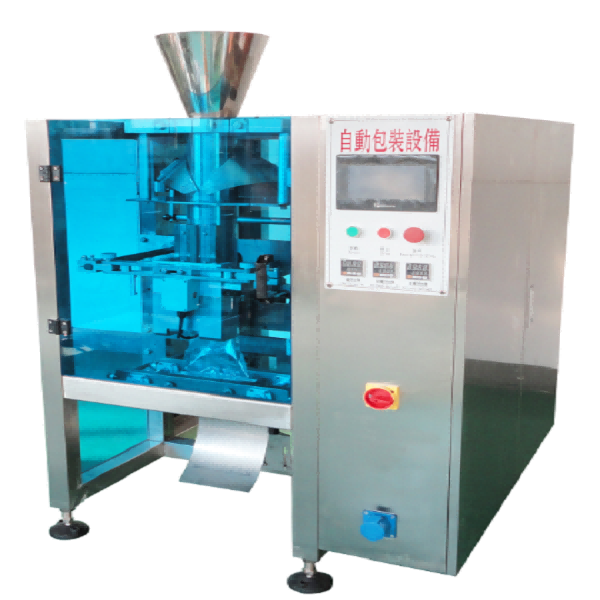
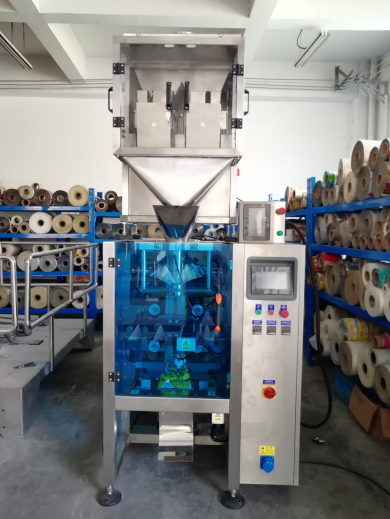
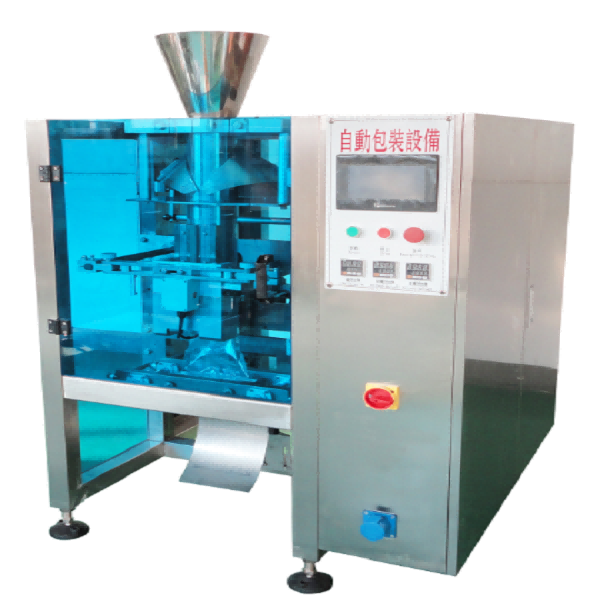
Nuts are not easy products for vacuum packaging. They are oily, brittle, sensitive to oxygen, and often sold in visually inspected retail packs. A nuts packing machine must protect flavor without cracking kernels or turning the pouch into a hard, unattractive block.
The practical trends are clear: stronger barrier films, more sustainable material claims, QR-based product information, and customized blends. Each trend is useful only if the buyer tests the line with real nuts, final pouches, and retail handling conditions.
1. Barrier
Film must reduce oxygen, moisture, and light exposure.
2. Sustainability
Recyclable or PCR claims need food-contact review.
3. Smart packs
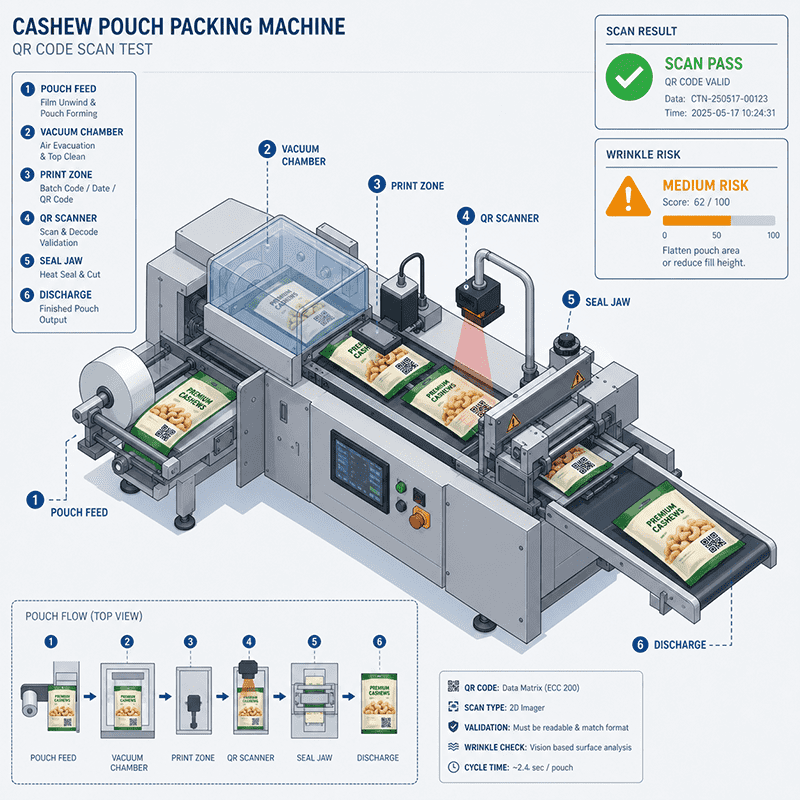
QR codes must remain scannable after vacuum forming.
4. Blends
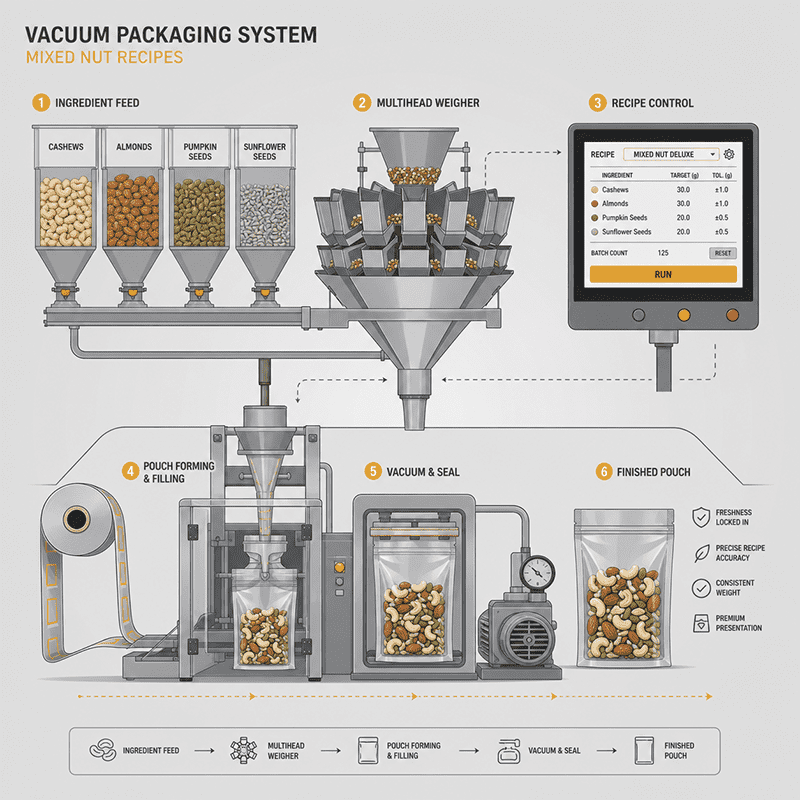
Recipe control matters when nuts, seeds, and fruit are mixed.
High-Barrier Film Must Still Seal Cleanly
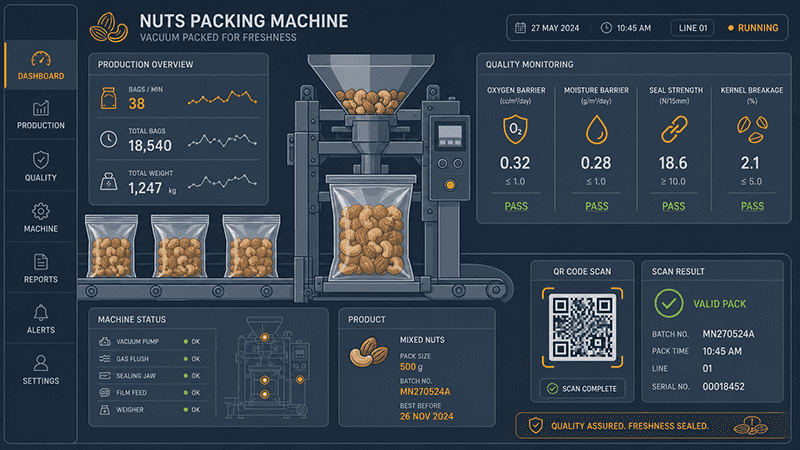
Better film can help slow oxidation and moisture gain, but the film must work on the actual line. A cashew pouch packing machine needs a stable sealing window. If the film requires narrow heat control, small temperature drift can produce weak seals or distorted pouches.
Buyers should ask for trial data at the intended speed. Seal strength, vacuum decay, pouch wrinkles, and kernel breakage should be measured together. A strong film is not useful if the line cannot seal it repeatedly.
Sustainable Materials Need More Than a Label Claim
Recyclable structures, downgauged films, and recycled content are important directions, but nut packaging still needs barrier performance. Oil-rich products punish weak material decisions quickly. The buyer should verify food-contact suitability, migration documents, seal strength, and shelf-life targets before changing film.
FDA explains that recycled plastics in food packaging require attention to possible contaminants, source control, and additive compliance. This is especially relevant when a nut brand wants PCR content in a food-contact pouch.
| Buyer question | Why it matters | Line test |
|---|---|---|
| Can the film seal at target speed? | Weak seals expose nuts to oxygen. | Vacuum decay and peel strength on the vacuum pouch packing machine |
| Will QR codes remain readable? | Vacuum collapse can wrinkle printed areas. | Scan test after packing and carton compression |
| Can the line run multiple blends? | Recipe drift changes nutrition and cost. | Weighing accuracy, cleaning access, and recipe lock |
QR Codes Are Useful Only When the Pack Stays Scannable
QR codes and GS1 Digital Link can connect buyers to origin, batch, freshness, ingredients, certifications, and recycling information. That is useful for premium nuts and export retail packs. It is also easy to execute badly.
The print zone should avoid high-wrinkle areas. A nut packaging machine trial should include scanning after vacuum collapse, carton compression, and shelf simulation. GS1 Digital Link can support product and traceability information, but the code still has to survive the physical pack.
Customized Nut Blends Need Recipe Discipline
Small packs with cashews, almonds, seeds, dried fruit, or coated inclusions can support premium positioning. They also create dosing and cleaning problems. A nuts packing machine should lock recipes, track ingredient weights, and allow practical access for cleaning between allergen or flavor changes.
For food-contact and traceability references, review FDA's Recycled Plastics in Food Packaging page and GS1 Digital Link.
Contact our engineering team directly:
Email: export@jialong.cn
WhatsApp: +86-136-2579-4992
Products: nuts packing machine